The current pandemic emergency has forced us once again to postpone the 10th International Congress of Tidal Sedimentology, which for 40 years has been held every four years hosted by various countries around the world and which for the first time will be organized in Italy.
While waiting for a better international situation allowing to resume congress activities, hopefully in the spring of 2022, the organizing committee of Tidalites proposes a virtual symposium on October 5th and 6th 2021, sponsored by the Italian Geological Society.
The workshop will host key notes by six international geoscientists who will present some of the latest breakthroughs on the sedimentary dynamics of modern and ancient tidal environments. The international community is invited to join us at the pre-Tidalites Virtual Symposium, as we wait for Tidalites 2022 in Matera.
14:45 – 15:10

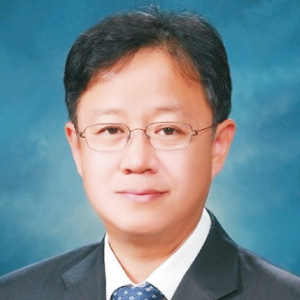
Prof. Kyungsik Choi
School of Earth and Environmental Sciences Seoul National University, Korea

Tidal, seasonal, and anthropogenic control on the sedimentology and morphologic evolution of macrotidal
flats, west coast of Korea
15:20 – 15:45

Dr. Fantina Madricardo
Consiglio Nazionale delle Ricerche ISMAR Istituto di Scienze Marine Bologna, Italy

Seafloor morphologies and benthic habitats in tidal environments: a case study from the Venice Lagoon
15:55 – 16:20

Dr. Carlo Messina
Equinor, Oslo,
Norway

Sedimentology and internal heterogeneity of tidal bar deposits: input in reservoir modelling with an example from the Norwegian Continental Shelf
15:45 – 16:10

Prof. Nicoletta Leonardi
Department of Geography and Planning University of Liverpool, UK
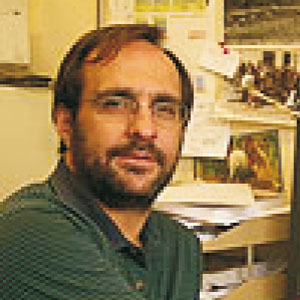
Dynamic interactions between tides and coastal systems: a modelling approach
16:20 – 16:45

Prof. Luis Buatois
College of Arts and Science University of Saskatchewan, Saskatoon, Canada

Ichnology of tidal environments: assessing environmental controls, benthos response, and ecosystem engineering
16:55 – 17:20

Prof. Rebecca Dorsey
Department of Earth Sciences University of Oregon, Eugene, USA
Sedimentology, stratigraphy, and regional significance of a latest Miocene to early Pliocene fault-controlled tidal straight in the lower Colorado River valley, USA
